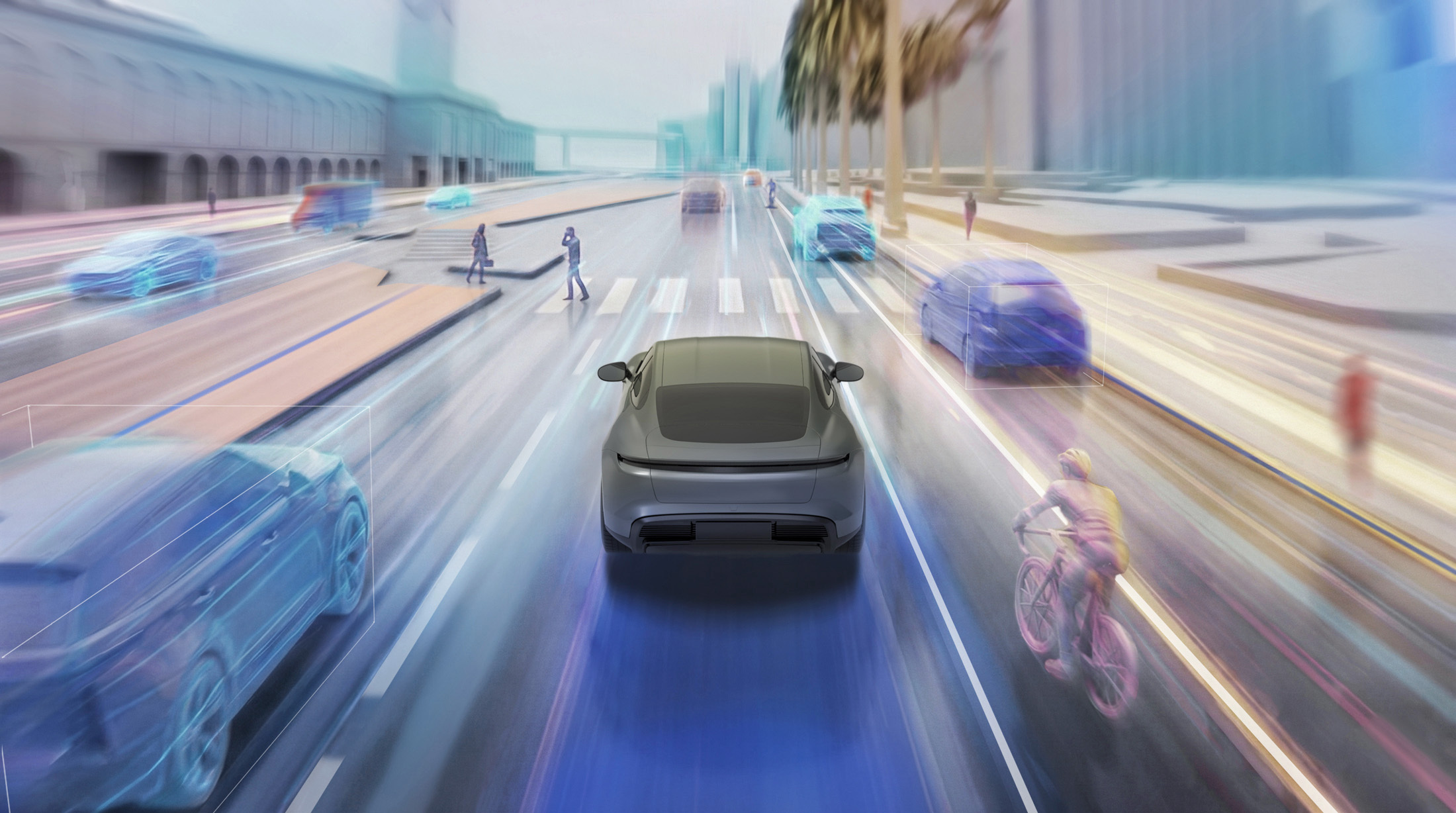
Outputs crisp 2MP (1920x1080) resolution per camera, achieving pixel-perfect photorealism across complex lighting, weather, and environmental modifications while preserving the underlying scene structure.

Resimulates full 6-camera surround-view setups at 5 fps, or up to 3-camera setups at 30 fps, with the advanced operational flexibility to seamlessly alter camera perspectives.

Effortlessly adds, removes, or modifies vehicle types, pedestrians, and cyclists within the video feed while automatically generating realistic surface reflections and lighting interactions directly at the pixel level.

Replicates specific physical sensor constraints and authentic hardware anomalies, including native sensor banding, optical lens flares, and dynamic exposure blinding to mirror real-world perception system failures.

Instantly varies lane configurations, crosswalks, road markings, and surface degradations (such as paved, cracked, or wet asphalt) to maximize dataset variety.

Maintains flawless, pixel-perfect segmentation masks and ground-truth labels synchronized across augmented videos, streamlining large-scale model training and validation for Levels 2 to 4 autonomy.

Uses text, image, or video inputs to instantly restylize existing drive logs, allowing engineering teams to transform environmental states through simple natural language prompts or reference media.

Explore Helm.ai’s AI software, foundation models, and AI-based development and validation tools.